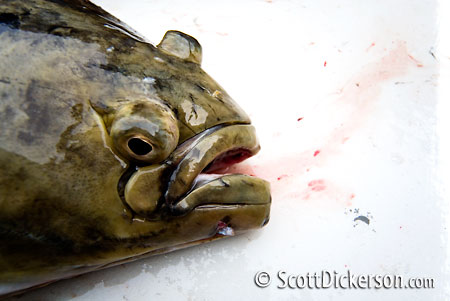
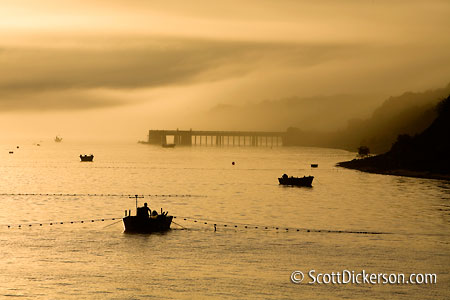
Let me tell you something about my hometown Homer, Alaska– it’s called the “Halibut Capital of the World.” I’m not sure if it’s confirmed, but the title came from claims that more dead halibut are brought through the boat harbor in Homer than any other port in the world. We are good at catching them, but an art director at Alaska Magazine told me a couple years ago that we were not doing very good at photographing them. His magazine was having trouble finding any fresh and catchy images of sport fishing for halibut. This is a bit of a surprise since well over half of the visitors to our tourist based town are here just for the halibut. You’d think we would be creating a glut of photographs of this big but fishing attraction!
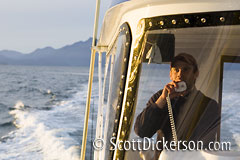 This freelance photographer took the wise words of advice and made plans; plans to do something lively with the subject of killing fish. They say if you want to do it right, get professional help. Fortunately, I have several friends who have made it their profession to catch halibut by operating fishing charters out of Homer. This connection made organizing this photo shoot a cinch. In September I spent a day out on lovely Kachemak Bay with David Bayes, captain of the ‘Grand Aleutian’ and owner of Deep Strike AK fishing charter company.
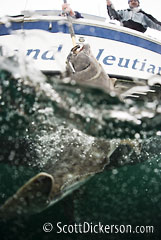 The goal of this photo shoot was the same as basically every other assignment– take an old subject that has been photographed a thousand times and make it look new and exciting. The shot that I dreamed up was a split view perspective (half under water, half above) with a big halibut being pulled out of the water onto the fishing boat framed by the dark depths of the ocean below and the smiling faces of the thrilled fisherman above. I have a ‘surf housing’ in my gear closet that I use to photograph those crazies surfing in Alaska. I’ll keep this short by saying that I learned a lot about photographing split view perspectives in the open ocean with one foot waves and about a 3mph current flowing past the boat. Next time I’ll try for some professional help with the weather forecasting. Despite the challenges, I am excited to share some of my favorite photos from this adventure with you. While I didn’t manage to get the perfect photo I was hoping for, I came much closer than I thought possible as I bounced around in the water being jerked constantly from the rope that kept me tied to the boat. The fish gave their lives for the photos, and the models were patient as I gurgled about how next time I’m bringing a snorkel and calmer seas.
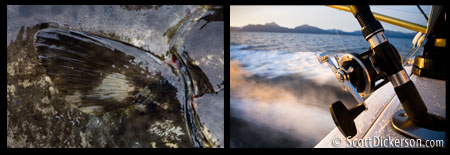
The photo gallery, Halibut fishing in Homer, Alaska, has a few other nice photos of details around the boat and a grip-n-grin photo of Ethan Waldvogel holding up a 150lb halibut. Oh, and I should tell you that I ended up bringing home 100lbs of fresh halibut from this photo shoot. In New York City this would be over worth over $2,000! How much did it cost me? Well, the vacuum bagging and freezing at Coal Point Seafood Company was $1/lb so I had to cough up $100. How much did I make from this photo shoot? well, nothing yet. . . Want to buy some photos of halibut fishing? They are fresh and catchy, just like it was floating around in 47 degree water behind the ‘Grand Aleutian’ last month as they reeled in the halibut.
 Written by Scott Dickerson for the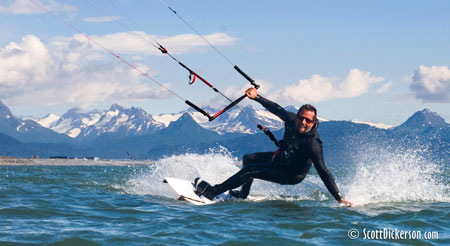
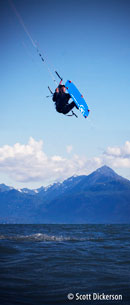 Kitesurfing is a real attention getter, rubbernecker and comment generator. The first time I saw someone kitesurfing a few years ago I didn’t know what to say either, I just knew I wanted to find someone to blurt out some excited nonsense to: “I saw this guy and he was doing this thing on the water with a parasail and ripping super fast and flying up in the air spinning and then I don’t know what else but it looked incredible.â€
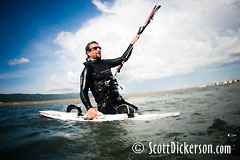 So what is kitesurfing? Basically it’s flying a huge kite that is so powerful that it can drag you around, up, and down. The kite has 4 lines attached allowing you to control its flight, it has a ‘control bar’ which you steer with, and it attaches to a harness you wear that. The surfing part happens when you get out on the water and stand on your board which is a cross between a wakeboard and a surfboard. The kite then drags you to and fro, lifting you off the water when you fly it certain ‘zones’ above you. This tangle of lines and fabric, which easily fits in a backpack, launched into a 15 mph wind will amaze anyone with its Hummer like horsepower. One of the greatest and most magical things about kitesurfing is this incredible power available without the consumption of fossil fuels; a non-motorized sport that can thrill even a diehard motorhead. Kiting brings a whole other level of excitement with it’s reliance on wind, especially when you sense that maybe your not in total control of the situation- similar to riding in your girlfriend’s car when the roads are icy.
 These photos were taken in Homer, Alaska; where every sunny summer day brings a daybreeze onshore creating ideal kitesurfing conditions. A growing number of the locals have started making the most of this setting, allowing me some good opportunities to shoot Alaskan kitesurfing photos. We have been discussing plans to pioneer a few of the countless ‘unkited’ locations around Alaska, so stay tuned for trip reports from the Kite Alaska team. If you are interested in getting involved post a comment below.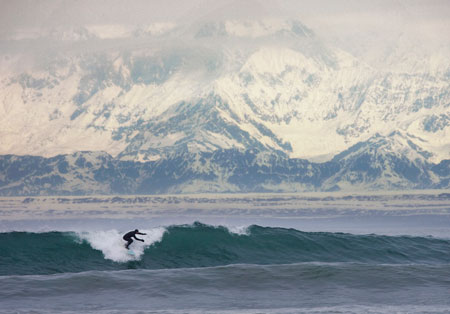
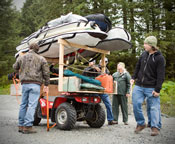 Some creative thinking brought about a plan to send Iceman’s four wheeler down to Yakutat on the Alaska marine highway ferry with our 12 surfboards. The 10 of us would follow along a week later in the jet. This worked out great, saving us hundreds of dollars in excess baggage charges and as a major bonus we had a beach buggy waiting for us in Yakutat. Iceman put his carpentry to work and slammed together an African-safari style rack for the wheeler that made it possible to put all those boards on the poor thing and still drive it onto the ferry.We were very excited when we found the four wheeler in Yakutat still upright despite it’s top heaviness from all our surfboards on the surf-safari rack.
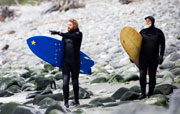 We later learned that notoriously rainy Yakutat had actually broken a rainfall record the day before our arrival. The next couple hours were spent trying to find dry wood for a fire, before we finally gave up and used the four wheeler gas instead. With our domestic chores out of the way, we scrambled into our wetsuits, waxed our surfboards, and headed for the water.
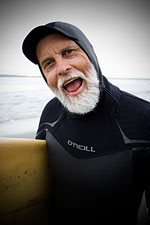 So began a four day surfing marathon. I am still in shock at the amount of surfing a few mid-fifty year old diehards can do. Of course, they may credit it to the handfuls of anti-inflammatories they would eat for desert each night, but pills and whiskey aside, that was still astounding feat of surfing dedication. There must be something about Alaskan surfers and the challenges that they must overcome to surf the last frontier that drives them to another level of addiction. I used my photography excuse to take rest breaks on several occasions while my surfing buddies/models just kept going, and going, and then it would get too dark to photograph, and they are still surfing. This is really saying something during an Alaskan summer where the sun doesn’t even set until after 10pm.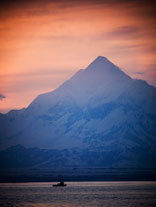
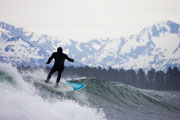 For most of us, this was our first surfing trip to Yakutat, but I doubt it will be the last. Everyone had a great time, and I don’t think I’m alone looking forward to the next time the phone rings and Iceman says Pack your bags, Surf trip to Yakutat- Yahooo!